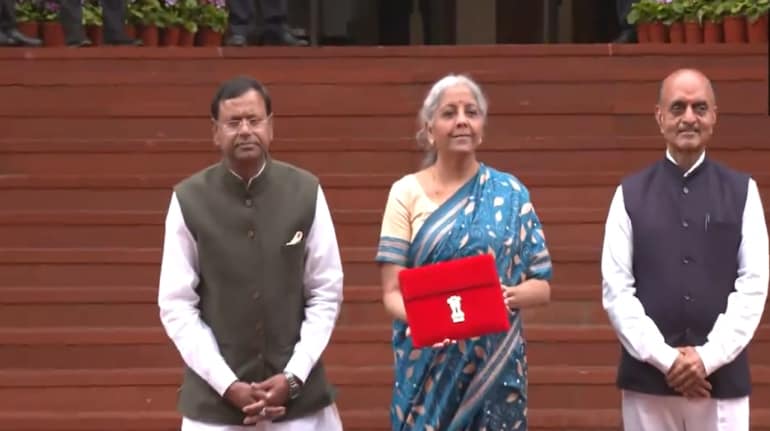
The ministry of road transport and highways has issued a draft notification proposing to exempt battery operated vehicles (BOV) from payment of fee for issue or renewal of registration certificate(RC). The move is aimed to encourage electric mobility in the country.
The ministry in a statement said that comments from general public and all stakeholders have been sought within a period of 30 days from the date of issuance of this draft notification.
"The Ministry of Road Transport and Highways has issued a draft notification dated May 27, 2021, further to amend the Central Motor Vehicles Rules, 1989, proposing to exempt BOV from payment of fees for the purpose of issue or renewal of RC and assignment of new registration mark," it said.
This has been notified to encourage e-mobility, the statement added.
Subscribe to Mint Newsletters
* Enter a valid email
* Thank you for subscribing to our newsletter.
Never miss a story! Stay connected and informed with Mint. Download our App Now!!
In Mumbai, petrol has been hovering above Rs 100-for-a-litre mark since May 29.
Petrol and diesel prices have been increased again on Tuesday. While petrol has become expensive by 25-26 paise per litre, diesel price has been raised by 23-24 paise for a litre on June 1.
Auto fuel in India has been on a steep hike since May 4. After the latest revision, a litre of petrol costs Rs 94.49. In Mumbai, petrol has been hovering above Rs 100-for-a-litre mark since May 29. A litre of petrol is being sold at whopping Rs 100.72 in the financial capital. In Chennai, you have to pay Rs 95.99 for a litre of auto fuel. The retail price of petrol has jumped to Rs 94.50 in Kolkata.
Diesel too has touched all-time high across the country. A litre of diesel is retailing at Rs 85.38 in Delhi. The auto fuel price has risen to Rs 92.69 in Mumbai. For buying a litre of diesel, you have to pay Rs 90.12 in Chennai and Rs 88.23 in Kolkata. Sri Ganganagar district of Rajasthan has the costliest petrol and diesel in the country.
The state-run oil marketing companies — Indian Oil Corporation (IOC), Bharat Petroleum, and Hindustan Petroleum revise the petrol and diesel prices daily. The auto fuel prices in India depend on various factors such global crude oil prices and the foreign exchange rates.
Oil prices rose on Tuesday ahead of an OPEC+ meeting and on optimism that fuel demand will grow in the months ahead. Brent crude futures for August gained 56 cents, or 0.8%, to $69.88 a barrel by 0125 GMT. US West Texas Intermediate crude for July was at $67.33 a barrel, up $1.01, or 1.5% from Friday’s close, according to Reuters.
India’s gross domestic product (GDP) shrank 7.3 per cent in 2020-21, the sharpest drop in recorded history, according to data released by National Statistical Office (NSO) on Monday. While GDP for the year’s last quarter (January-March 2021) grew by 1.6 per cent. India has now reported two consecutive quarters of GDP expansion, after having witnessed two consecutive quarters of contraction earlier in the financial year when India entered a technical recession.
Reliance Industries Ltd (RIL), Oberoi Realty and Godrej Properties stocks may rally over 20 per cent in the coming three months, analysts at ICICI direct Research said. The new consumer businesses, Jio and retail are likely to be growth drivers for the oil-to-telecom conglomerate in the coming years. While the Realty sector has been gaining upward momentum after underperforming over the past decade.
At the initial stage, RBI had directed the initiation of resolution proceedings for 12 large accounts by banks. These 12 companies had outstanding claims of Rs.3.45 lakh crore compared with a liquidation value of Rs.73,220 crore. Resolution plans for nine companies have been approved, while liquidation orders were passed against two companies. CARE Ratings
The much awaited data from the National Statistical Office on India’s Gross Domestic Product (GDP) numbers for the January to March quarter and for the year as a whole, has been better than the expectations. But then, there are concerns. The economy grew by 1.6 per cent in the quarter and though the year saw an overall contraction of 7.3 per cent many experts were fearing worse and were therefore somewhat relieved. “The earlier expectation was that the economy will shrink a lot more,” says Mahesh Vyas, managing director and CEO of the Centre for Monitoring Indian Economy (CMIE), a leading research firm and an independent think tank.
Escorts monthly wholesale numbers for May’21 declined by 8% MoM to 6,423 units, impacted by the second wave of Covid-19, especially in rural India. The management had shared earlier during the result call that ~65% of the dealerships were partially or fully shut and there was decline in walk-ins. Domestic sales for May’21 stood at 6,158 units while exports stood at 265 units. As per the release, the situation has eased in the last few days of May’21 and expect normalcy to return soon. The company had witnessed a strong pent up demand last year post gradual easing of restrictions and is maintaining inventory in the channel in anticipation of the same. Although the near-term performance is expected to be muted, we remain positive on Escorts from the medium-term perspective considering improving rural incomes and growth in exports. Milan Desai, Lead Equity Analyst, Angel Broking
State Bank of India (SBI) share price surged to a new 52-week high of Rs 433.80 apiece intraday on BSE. SBI stock has surpassed its previous high of Rs 433.60 hit on May 28, 2021
At 50.8 in May, down from 55.5 in April, the seasonally adjusted IHS Markit India Manufacturing Purchasing Managers’ Index (PMI) moved closer to the no-change mark of 50.0
Bharat Electronics Ltd (BEL) share price jumped as high as 5.6 per cent to Rs 153.50 apiece in intraday on BSE. Other defence stocks such as Hindustan Aeronautics Ltd, Garden Reach Shipbuilders, Bharat Dynamics, Astra Microwave Products, BEML, Bharat Forge, Mishra Dhatu Nigam, and Mazagon Dock Shipbuilders were also trading higher.
The markets are in fine form - we should be headed to 15900-16000 as the next plausible target. If it is not a one way move and the market corrects in between, it should be well utilized to accumulate long positions for higher targets. A strong support base is now formed at 15300 and as long as we keep closing above this level, the overall trend of the market is bullish. Manish Hathiramani, proprietary index trader and technical analyst, Deen Dayal Investments
In the Month of May 21, Bajaj Auto Ltd reported auto sales number ~114% yoy growth to 2,71,862 units which came in-line with our estimates. The company has reported domestic growth ~52% (60,830 units). On the export front, the company reported strong growth of ~142% (2,11,032). Considering strong growth in domestic and export business, we are positive on stock with a buy rating. Amarjeet Maurya - AVP - Mid Caps, Angel Broking
The ongoing bull run in the market has taken even the incorrigible optimists by surprise. FIIs, regarded as smart investors, have been caught on the wrong foot. Their sustained selling from early April to mid May has proved to be a wrong strategy and, therefore, now they are making amends through heavy purchases. Massive FII buying of Rs 2412 crores in the cash market yesterday is an indication of the likely direction of this market. The fact that India VIX is at a 52- week low also indicates the resilience of the market. Q4 FY21GDP growth rate at 1.6% and annual GDP contraction at 7.3 % are better than expectations. Q4 numbers show robust growth in construction & manufacturing. This trend is likely to sustain in the last 3 quarters of FY 22 suggesting good prospects for related industries. Nifty has clearly broken out of the upper range and the bulls are in total control. Valuation concerns are now on the back burner. V K Vijayakumar, Chief Investment Strategist at Geojit Financial Services
The second wave of Covid 19 has had less adverse impact on the economy as the lockdown has been less stringent, localized and many businesses have adapted to the pandemic/lockdown. Having said that the secod wave of the pandemic has been more fatal and scarring for the households, and this will be reflected in their spending pattern. Moreover, the unorganized sector and MSME’s that are large contributors to the Indian economy, will find it extremely difficult to sustain two waves of the pandemic and the demand destruction in the last one and half years. India’s growth trajectory in the next few quarters will be strongly linked to the pace of vaccination and the time taken to control the pandemic. this would have direct bearing on business and consumer sentiments, which in turn will influence the consumption and investment scenario. Rajani Sinha, Chief Economist & National Director – Research, Knight Frank India
The better than expected data will provide relief to the central bank as it announces its credit policy later this week. Moving forward the situation is expected to improve with few states relaxing curbs. A prediction of a normal monsoon year by IMD will keep inflation in check. The upcoming festive season will provide a pickup in demand. The consistent high number of vaccination and number of cases coming down is a sentiment booster. Broadly the economic growth rate will see an uptick from Q2FY22 onwards. Pankaj Bhansali, COO, Eqaro Surety
Gold Price Today, Gold Price Outlook, Gold Price Forecast: Gold and silver prices were trading higher in India on Tuesday, on the back of positive international trends, where gold surged to a near five-month high of $1,914.26 on a weaker US dollar and inflation concerns. On Multi Commodity Exchange, gold August futures were trading Rs 134 or 0.23 per cent up at Rs 49,484 per 10 gram, as against the previous close of Rs 49,349. Silver July futures were ruling at Rs 72,668 per kg, up Rs 800 or one per cent on MCX.
The Nifty sectoral indices were largely positive, barring Nifty Metal and Nifty Pharma indices. Nifty Auto index was up neaely one per cent and Nifty Bank index 0.4 per cent
The Rupee closed at a 15-month high on monthly basis and against its traditional depreciating May month seasonality, despite major states were under lockdown and business activities were shut. The inflows in the form of QIP, corporate borrowing and flows from MSCI & FTSE helped to pullback dollars into India. But over the last two sessions, Rupee failed to cross its move beyond 72.30 as RBI finally intervened along with the month-end oil importer’s bid. Further, peer currency- Chinese Yuan fell from a three-year high of 6.3570 to 6.3710 after PBoC went on tightening policy by raising their Cash Reserve Ratio from 5% to 7%, which led Rupee to depreciate further upto 72.65 against USD. However, RBI’s recent buying action could absorb all the flows and Rupee could restrict its gains. Overall, RBI’s action will not allow Rupee to move beyond 72.30 mark. Over the short term, we expect Indian Rupee to trade in the range of 72.30-73.20 with an upside bias. Amit Pabari, managing director, CR Forex Advisors
UltraTech Cement, Asian Paints, Dr Redyy's, TCS, Nestle India, Infosys were among top Sensex laggards
Bulls are expected to sustain their momentum in Indian equity markets looking at better than expected GDP numbers, drop in daily fresh cases of covid and increasing buying interest of FIIs. 15,430 shall act as nearest support levels while 15,300 shall act as next support. Nifty 50 needs to remain above 15,500 to continue with its upside journey. Metals could show some strength in today's trading session after showing positive trend reversal yesterday when Iron ore prices in Singapore went up by around 5% post China announced positive data on its steel industry. Indian markets will also keep a track on PMI Manufacturing data due to be posted today. Mohit Nigam, Head, PMS - Hem Securities
Bajaj-Auto, ONGC, Housing Development Finance Corporation (HDFC), IndusInd Bank, Maruti Suzuki, State Bank of India were among top Sensex gainers
Sensex was trading 73 points or 0.14 per cent up at 52,010, while the broader Nifty 50 index was trading at record high level
COMEX gold trades marginally higher by 0.35% near $1912/oz after a 0.4% gain on Friday. Gold continues to hold above $1900/oz as Fed and other central banks emphasize on continuing with loose monetary policy. However, ETF outflows and weaker demand in India amid continuing virus related restrictions might cap the gains. Gold has continued to hold above $1900/oz however any sustained rise may be challenged by pause in US dollar index fall. Ravindra Rao,CMT, EPAT, VP- Head Commodity Research at Kotak Securities
Since the last monetary policy meeting in early April, it seems like the world has changed, at least for India. COVID-19 2.0 has caught the country unawares. As we were preparing to get back to the way things were, on the back of a good fourth fiscal quarter of economic activity, the virus has hit the country, its people and the economy with a virality that has caught us off guard. When the Monetary Policy Committee (MPC) meets for the second monetary policy of FY2022, COVID 2.0 and its impact will be the most defining factor in its deliberations.
Sensex was trading 163 points or 0.32 per cent higher at 52,101 in the pre-opening session on Tuesday
BSE-listed companies such as ITC, Balrampur Chini Mills, Gujarat Gas, Radico Khaitan, Aris International, Divyashakti Granites, Salasar Techno Engineering, Sungold Media and Entertainment, Solitaire Machine Tools, TV Vision, and VR Woodart, among others, are scheduled to release Jan-Mar quarter earnings on June 1.
In overnight trade on Wall Street, US stocks edged higher. The S&P500 index rose 0.1 per cent, the Dow Jones Industrial Average gained 0.2 per cent, and the Nasdaq Composite was up 0.1 per cent.
Asian stock markets were trading mixed on Tuesday, Japan’s Nikkei 225 gained 0.11 per cent while the Topix index was up 0.17 per cent. South Korea’s Kospi edged jumped over half a per cent higher.
The fiscal deficit stood at 9.3 per cent of the Gross Domestic Product (GDP) in the last fiscal, better than 9.5 per cent projected in the revised estimates in the Union Budget in February. Economic activities were severely hit in the last financial year due to the coronavirus pandemic as well as subsequent lockdowns and restrictions to curb the spread of infections.
In April 2021, the eight core sectors registered a double-digit output growth of 56.1% compared with 11.4% growth in March 2021. The high growth in output can be attributed to a low base effect (-37.9% in April 2020) as the nation-wide lockdown imposed last year brought production activities to a standstill resulting in huge output losses. The expansion in April has been led by an exponential growth in output of steel and cement. All sectors except crude oil have witnessed positive growth during the month. However, the core sector output has been lower by 15.1% in April’21 over the March’21 level with a broad-based contraction across all segments on a month-on-month basis. CARE Ratings
India’s gross domestic product (GDP) shrank 7.3% in 2020-21, the sharpest drop in recorded history, with the pandemic dealing a body blow to most sectors of the economy that was already debilitated, according to data released by National Statistical Office (NSO) on Monday. The contraction was, however, narrower than the 8% forecast in the second advance estimate put out in late February, primarily because the March quarter turned in significantly better numbers, on the back of rather board-based upswing across sectors including manufacturing, construction and electricity.
India’s economic report card came in with better-than-expected numbers as the GDP recorded a 1.6% growth in the January-March period. The growth figures were better than the 1% median forecast by 29 economists polled by Reuters. For the full financial year 2020-21, the economic contraction came in at -7.3%, better than the government’s own -8% estimates. The agriculture sector continued to grow steadily in the quarter, while construction, electricity and other utilities posted strong growth.
Bajaj Auto garnered a cumulative sales of 2,40,554 units in May 2021 as against 1,12,798 units during the same period in 2020 with 113 per cent growth
Bajaj Auto posted a cumulative domestic tally of 60,342 units in the month of May 2021 as against 39,286 units during the same period in 2020 with a massive Year-on-Year sales increase of 54 per cent. This was mainly due to the unfavourable market scenario that existed twelve months ago when the automotive industry went into limbo.
On the exports side, the homegrown manufacturer asserted its dominance once again as 1,80,212 units were recorded against 73,512 units during the corresponding month in May 2020 with a huge 145 per cent YoY volume surge. The cumulative domestic and export tally stood at 2,40,554 units last month as against 1,12,798 units with 113 per cent positive sales growth.
Bajaj saw a dip of 38 per cent in the commercial vehicle division as 488 units were registered against 788 units in May 2020. The brand shipped 30,820 units of CVs in May 2021 as against 13,542 units with a 128 per cent jump in volumes. The total stood at 31,308 units as against 14,330 units with a healthy 118 per cent increase in sales. The sales of the two-wheelers and commercial vehicles led to a total of 2,71,862 units as against 1,27,128 units with 114 per cent growth. Domestically, Bajaj posted 60,830 units as against 40,074 units in May 2020 with 52 per cent sales jump while the exports stood at 2,11,032 units as against 87,054 units with 142 per cent growth.
In the FY2022 (April and May period), Bajaj recorded 1,86,912 units as against 39,386 units during the same period in the previous fiscal with a huge 376 per cent growth in volumes. The exports ended up at 4,01,815 units as against 1,05,521 units in April-May 2020 with 281 per cent increase in volumes and cumulatively, 307 per cent positive sales were noted.
Bajaj carries the same momentum on the commercial vehicle sales table as well as the combined domestic and export stood at 71,151 units as against 20,199 units with 252 per cent growth. As a whole, the combined numbers of the two-wheeler and CV range in April and May 2021 stood at 6,59,878 units as against 1,65,006 units with a 300 per cent YoY sales surge. The brand is expected to further build on its momentum in the remaining months of the calendar year.
India’s manufacturing activity hit a major speed bump in May after being on the slow road to improvement in April, as the renewed escalation of the (COVID-19) pandemic and subsequent restrictions played spoilsports for factory activity.
According to the monthly IHS Markit India Manufacturing Purchasing Managers’ Index (PMI) survey released on June 1, manufacturing PMI stood at a ten-month low of 50.8 in May, down from 55.5 in the previous month of April.
In PMI parlance, a print above 50 means expansion, while a score below that denotes contraction. The May numbers show the sector is standing on the brink of contraction yet again. The slight growth in May was mostly contributed by foreign export orders rather than domestic demand.
After starting 2021 on a stronger footing than it ended 2020, the manufacturing sector has continued to lose growth momentum. While production, new orders and input buying have continued to expand, but growth has stagnated.
“The Indian manufacturing sector is showing increasing signs of strain as the COVID-19 crisis intensifies. Key gauges of current sales, production and input buying weakened noticeably in May and pointed to the slowest rates of increase in ten months. In fact, all indices were down from April,” Pollyanna De Lima, Economics Associate Director at IHS Markit and author of the report, said.
New demand, new work orders and export contracts all marginally increased in May. But it was not enough to push up production or sales by a sustainable margin.
New orders, rose at the slowest pace since August, 2020. According to panel members, demand was suppressed by the COVID-19 crisis. Also, sudden rise in the second wave of theCovid-19 pandemic and difficulties in securing raw materials, PMI survey respondent firms said.
On the other hand, export orders specifically presented a better opportunity to the industry. "Although new export orders also increased at a softer rate, the upturn was solid and outpaced the long-run series trend," the PMI survey said.
But as a result of overall weak order books, while firms scaled up production volumes in May, the pace of expansion was again, the slowest in the past ten-months.
Overall sales grew for the eighth successive month, but softened to a seven-month low.
The PMI survey showed manufacturers cut jobs yet again in March, taking the current sequence of job shedding to 14-straight months. Panellists indicated that the fall stemmed from COVID-19 restrictions related to workforces.
The data for May continued to signal lengthening supplier delivery times, with vendor performance worsening for the third straight month, mostly due to global shortages of raw materials and the COVID-19 pandemic.
As a result of the relative scarcity of raw materials, input costs further rose over the month. The rate of inflation eased to a four-month low, but remained sharp and above its long-run average. Surveyed firms flagged higher aluminium, chemical, copper, plastic and steel prices.
Amid reports of ongoing efforts to protect margins from cost increases, firms lifted their selling prices again in May. The rate of charge inflation was solid, but softened from April.
While the detrimental impacts of the pandemic and associated restrictions seen in the manufacturing sector are considerably less severe than during the first lockdown, the PMI survey warned that the current downturn may continue for some time.
"Growth projections were revised lower, as firms became more worried about the escalation of the pandemic and local restrictions. The overall degree of optimism towards the year-ahead outlook for output was at a ten-month low, a factor which could hamper business investment and cause further job losses." De Lima said.
On Monday, the Indian government released its latest estimates of economic growth for the last financial year that ended in March 2021. India’s Gross Domestic Product (GDP) contracted by 7.3% in 2020-21. To understand this fall in perspective, remember that between the early 1990s until the pandemic hit the country, India grew at an average of around 7% every year.
There are two ways to view this contraction in GDP.
One is to look at this as an outlier — after all, India, like most other countries, is facing a once-in-a-century pandemic — and wish it away.
The other way would be to look at this contraction in the context of what has been happening to the Indian economy over the last decade — and more precisely over the last seven years, since the Prime Minister Narendra Modi-led government just completed its seventh anniversary last week.
Seen in this context, the latest GDP data suggests that it is not an outlier. Instead, if one looked at some of the most important variables in the data, India’s economy had been steadily worsening during the current regime even before the Covid-19 pandemic.
A worker unloads sacks of grain at a store in Chandni Chowk market in New Delhi.
So has the Indian economy fared better during the seven years of the present government?
Perhaps the best way to arrive at such a conclusion is to look at the so-called “fundamentals of the economy”. This phrase essentially refers to a bunch of economy-wide variables that provide the most robust measure of an economy’s health. That is why, during periods of economic upheaval, you often hear political leaders reassure the public that the “fundamentals of the economy are sound”.
Let’s look at the most important ones.
Gross Domestic Product
Contrary to perception advanced by the Union government, the GDP growth rate has been a point of growing weakness for the last 5 of these 7 years.
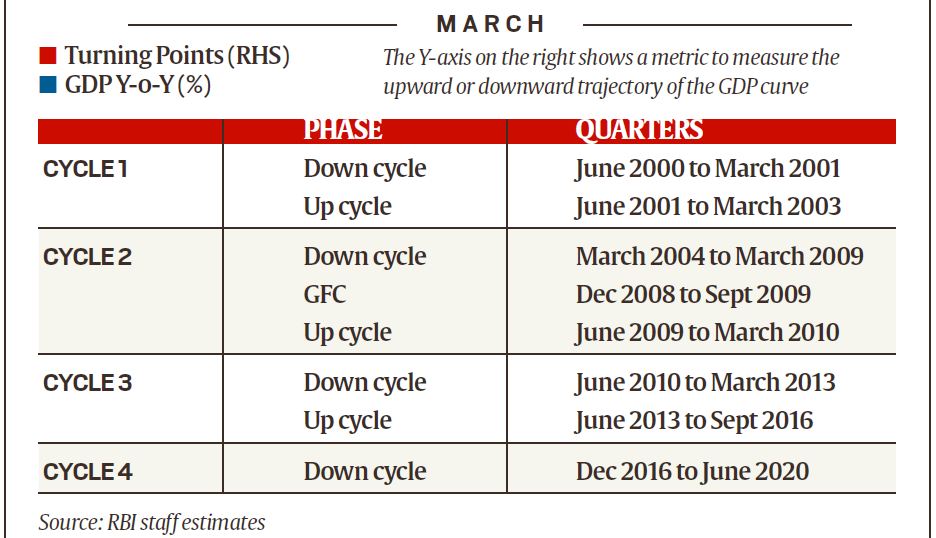
Let us look at Chart 1, provided in the Reserve Bank of India or RBI’s Annual Report for FY21 that was released on May 27. The chart maps the turning points in India’s growth story.
Two things stand out. After the decline in the wake of the Global Financial Crisis, the Indian economy started its recovery in March 2013 — more than a year before the present government took charge.
But more importantly, this recovery turned into a secular deceleration of growth since the third quarter (October to December) of 2016-17. While RBI does not state it, the government’s decision to demonetise 86% of India’s currency overnight on November 8, 2016 is seen by many experts as the trigger that set India’s growth into a downward spiral.
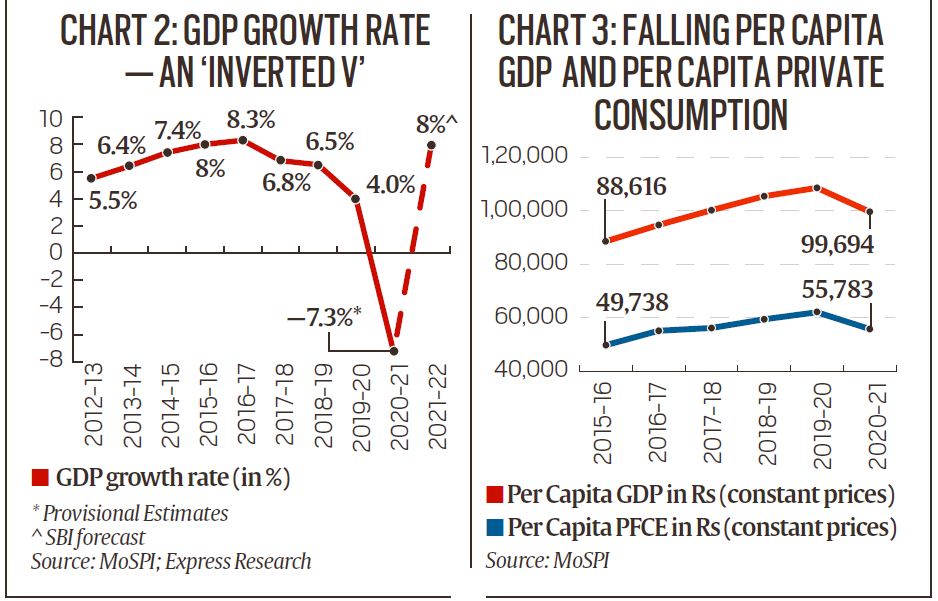
As the ripples of demonetisation and a poorly designed and hastily implemented Goods and Services Tax (GST) spread through an economy that was already struggling with massive bad loans in the banking system, the GDP growth rate steadily fell from over 8% in FY17 to about 4% in FY20, just before Covid-19 hit the country.
In January 2020, as the GDP growth fell to a 42-year low (in terms of nominal GDP), PM Modi expressed optimism, stating: “The strong absorbent capacity of the Indian economy shows the strength of basic fundamentals of the Indian economy and its capacity to bounce back”.
As an analysis of key variables suggests, the fundamentals of the Indian economy were already quite weak even in January last year — well before the pandemic. For example, if one looks at the recent past (Chart 2), India’s GDP growth pattern resembled an “inverted V” even before Covid-19 hit the economy.
GDP per capita
Often, it helps to look at GDP per capita, which is total GDP divided by the total population, to better understand how well-placed an average person is in an economy. As the red curve in Chart 3 shows, at a level of Rs 99,700, India’s GDP per capita is now what it used to be in 2016-17 — the year when the slide started. As a result, India has been losing out to other countries. A case in point is how even Bangladesh has overtaken India in per-capita-GDP terms.
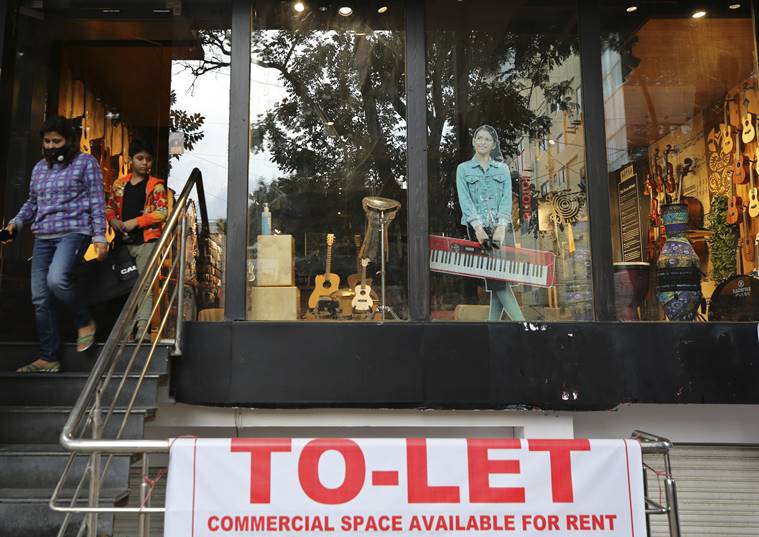
A woman and a child exit a music store as a to-let sign is displayed on a floor below vacated by the tenant recently in Bengaluru
Unemployment rate
This is the metric on which India has possibly performed the worst. First came the news that India’s unemployment rate, even according to the government’s own surveys, was at a 45-year high in 2017-18 — the year after demonetisation and the one that saw the introduction of GST. Then in 2019 came the news that between 2012 and 2018, the total number of employed people fell by 9 million — the first such instance of total employment declining in independent India’s history.
As against the norm of an unemployment rate of 2%-3%, India started routinely witnessing unemployment rates close to 6%-7% in the years leading up to Covid-19. The pandemic, of course, made matters considerably worse.
What makes India’s unemployment even more worrisome is the fact that this is happening even when the labour force participation rate — which maps the proportion of people who even look for a job — has been falling.
With weak growth prospects, unemployment is likely to be the biggest headache for the government in the remainder of its current term.
Inflation rate
In the first three years, the government greatly benefited from very low crude oil prices. After staying close to the $110-a-barrel mark throughout 2011 to 2014, oil prices (India basket) fell rapidly to just $85 in 2015 and further to below (or around) $50 in 2017 and 2018.
On the one hand, the sudden and sharp fall in oil prices allowed the government to completely tame the high retail inflation in the country, while on the other, it allowed the government to collect additional taxes on fuel.
But since the last quarter of 2019, India has been facing persistently high retail inflation. Even the demand destruction due to lockdowns induced by Covid-19 in 2020 could not extinguish the inflationary surge. India was one of few countries — among comparable advanced and emerging market economies — that has witnessed inflation trending consistently above or near the RBI’s threshold since late 2019.
Going forward, inflation is a big worry for India. It is for this reason that the RBI is expected to avoid cutting interest rates (despite faltering growth) in its upcoming credit policy review on June 4.
Fiscal deficit
The fiscal deficit is essentially a marker of the health of government finances and tracks the amount of money that a government has to borrow from the market to meet its expenses.
Typically, there are two downsides of excessive borrowing. One, government borrowings reduce the investible funds available for the private businesses to borrow (this is called “crowding out the private sector”); this also drives up the price (that is, the interest rate) for such loans.
Two, additional borrowings increase the overall debt that the government has to repay. Higher debt levels imply a higher proportion of government taxes going to pay back past loans. For the same reason, higher levels of debt also imply a higher level of taxes.
On paper, India’s fiscal deficit levels were just a tad more than the norms set, but, in reality, even before Covid-19, it was an open secret that the fiscal deficit was far more than what the government publicly stated. In the Union Budget for the current financial year, the government conceded that it had been underreporting the fiscal deficit by almost 2% of India’s GDP.
Rupee vs dollar
The exchange rate of the domestic currency with the US dollar is a robust metric to capture the relative strength of the economy. A US dollar was worth Rs 59 when the government took charge in 2014. Seven years later, it is closer to Rs 73. The relative weakness of the rupee reflects the reduced purchasing power of the Indian currency.
These were some, not all, of the metrics that often qualify as the fundamentals of an economy.
What’s the outlook on growth?
The biggest engine for growth in India is the expenditure by common people in their private capacity. This “demand” for goods accounts for 55% of all GDP. In Chart 3, the blue curve shows the per capita level of this private consumption expenditure, which has fallen to levels last seen in 2016-17. This means if the government does not help, India’s GDP may not revert to the pre-Covid trajectory for several years to come. It is for this reason that the latest GDP should not be viewed as an outlier.



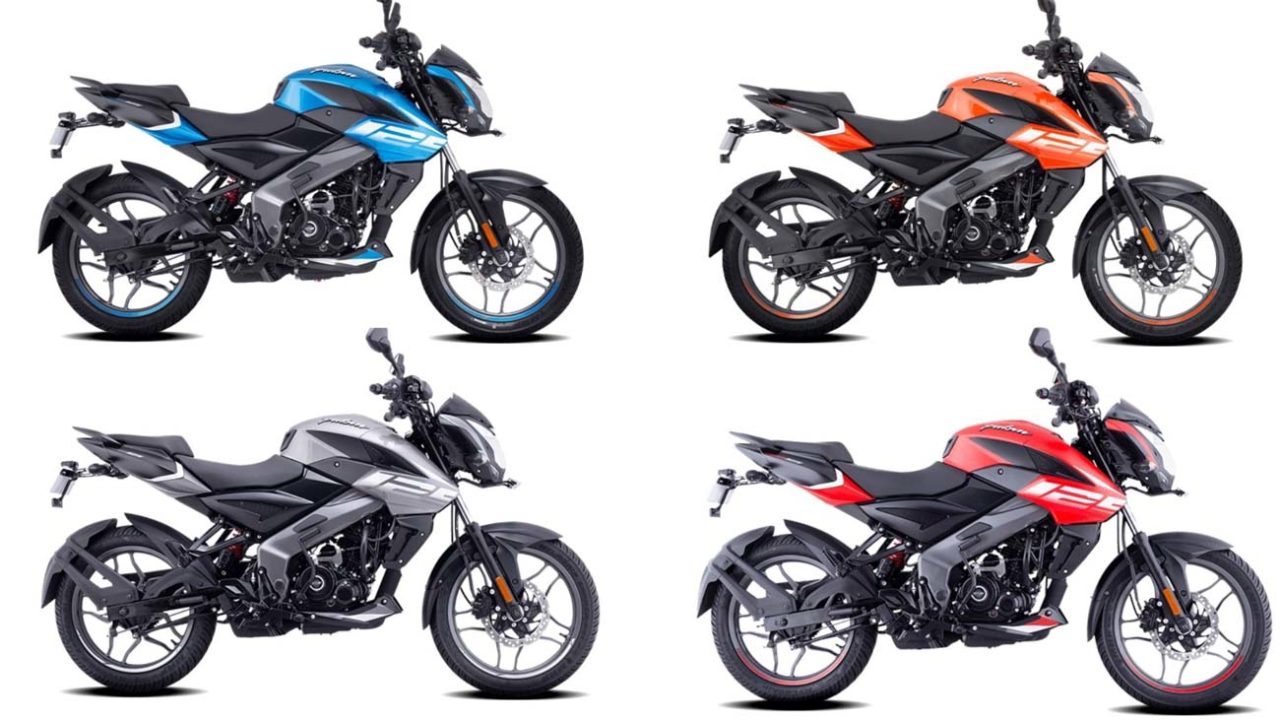 The sales of the two-wheelers and commercial vehicles led to a total of 2,71,862 units as against 1,27,128 units with 114 per cent growth. Domestically, Bajaj posted 60,830 units as against 40,074 units in May 2020 with 52 per cent sales jump while the exports stood at 2,11,032 units as against 87,054 units with 142 per cent growth.
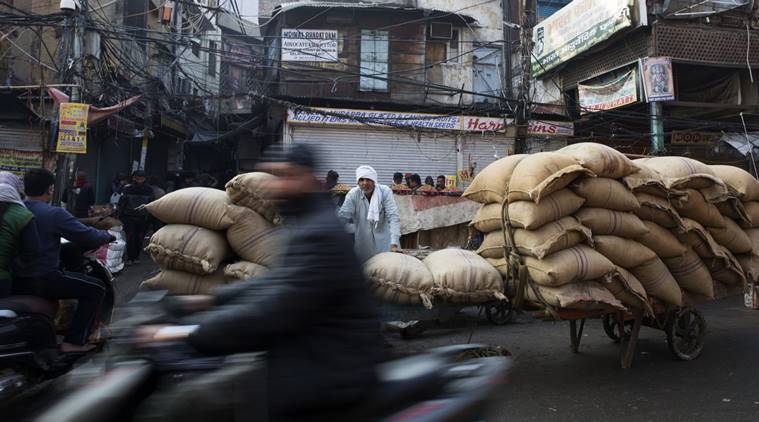 A worker unloads sacks of grain at a store in Chandni Chowk market in New Delhi.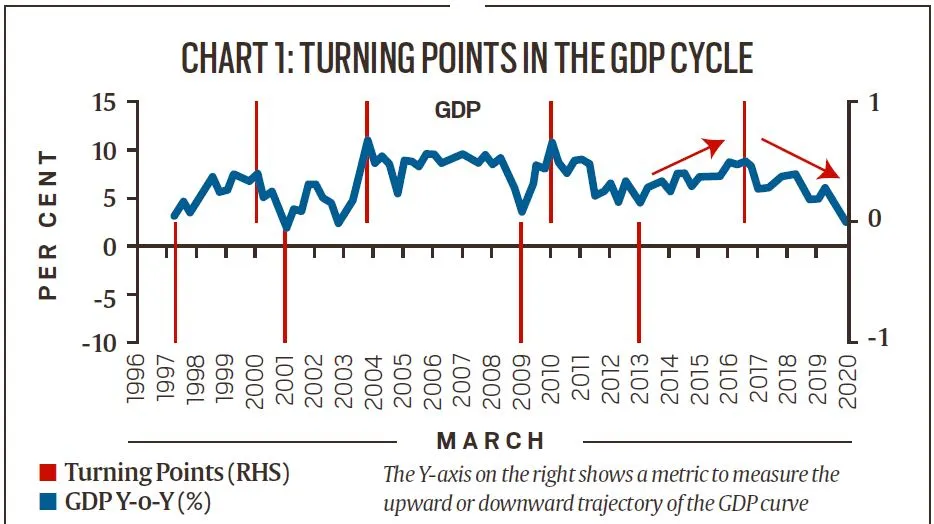
 A woman and a child exit a music store as a to-let sign is displayed on a floor below vacated by the tenant recently in Bengaluru