Rechercher dans ce blog

Wednesday, October 25, 2023

Adani Auditor EY Faces Inquiry by India’s Accounting Regulator: Report - The Wire

New Delhi: India’s accounting regulator, the National Financial Reporting Authority (NFRA), has initiated an inquiry against one of EY’s member firms in the country, S.R. Batliboi, which audits certain Adani Group companies, Bloomberg reported, citing people familiar with the matter, on Wednesday (October 25).

According to the report, the NFRA’s inquiry began in recent weeks. The National Financial Reporting Authority has requested documents and communications related to the audits of Adani-controlled companies dating back to 2014, it said.

S.R. Batliboi currently audits five of Adani’s listed firms – Adani Power, Adani Green Energy, Adani Wilmar, and recently acquired cement companies ACC and Ambuja Cements.

It, however, remains unclear how long the NFRA’s inquiry could take or what repercussions, if any, could be faced by the auditor or the audited, Bloomberg said.

Bloomberg News sought comments from the auditor and the Adani Group. Both parties did not respond. A representative for EY and S.R. Batliboi also declined to comment, as per the report.

In August, Deloitte, Haskins & Sells LLP had resigned as the statutory auditors of Adani Ports and Special Economic Zone (APSEZ).

In May, the audit firm had flagged some transactions by Adani Group, citing allegations from US-based short seller Hindenburg Research’s report that wiped off half of the market value of the ports-to-power conglomerate.

In the same month, Ahme­dabad-based chartered accountancy firm Shah Dhandharia & Co. – which was named in Hindenburg Research’s report – had resigned as statutory auditor of Adani Total Gas. It told the Telegraph that it had decided to resign “due to increased professional preoccupation in other assignments”.

In October 2022, the Morning Context had reported that two accountancy firms – Shah Dhandharia & Co. and Dharmesh Parikh & Co. – that audit most of Adani Group companies have links to each other, and therefore, raise concerns over the group’s corporate governance.

It further said that Adani Group paid them a little over Rs 7 crore, as compared to Rs 84 crore paid by Mukesh Ambani’s Reliance Industries.

US-based short seller Hindenburg Research, in its January 24 report, had also raised the issue of the size and capability of the firms auditing the Adani Group.

Adblock test (Why?)


Adani Auditor EY Faces Inquiry by India’s Accounting Regulator: Report - The Wire
Read More

Tuesday, October 24, 2023

Market Trading Guide: DRL among 4 stock recommendations for Wednesday - Stock Ideas - The Economic Times

The benchmark equity indices closed lower for the fourth straight session on Friday, dragged by banking, financial, IT, and metal stocks. The S&P BSE Sensex closed 1.26% lower at 64,572, while the NSE Nifty 50 index ended below the 19,300 level.

"The short-term trend of Nifty continues to be negative. Having moved below the support of 19,330, one may expect Nifty to slide down to 18,825 levels 200-day EMA in the near term. Any attempt of upside bounce could encounter resistance around 19,400 levels," said Nagaraj Shetti, Technical Research Analyst, HDFC Securities.

Here are 4 stock recommendations for Wednesday:

Adblock test (Why?)


Market Trading Guide: DRL among 4 stock recommendations for Wednesday - Stock Ideas - The Economic Times
Read More

Vedanta finance chief Sonal Shrivastava quits, Ajay Goel of Byju's rejoins as CFO | Mint - Mint

BENGALURU: India's Vedanta on Tuesday said Chief Financial Officer (CFO) Sonal Shrivastava has resigned amid a major structural overhaul announced last month.

Ajay Goel, incumbent CFO at Indian edtech startup Byju's, will return as Vedanta's finance chief effective Oct. 30, the company said in a statement.

Billionaire Anil Agarwal-led Vedanta announced plans to carve the metals-to-oil conglomerate into six separate businesses last month, a move aimed at shoring up the group's financial performance after earlier attempts to privatise the company and trim its dues did not materialise.

Shrivastava had joined Vedanta in June, and was the third person to hold the position since 2021 after GR Arun Kumar and Goel.

Goel had resigned from Vedanta in April to join Byju's.

The conglomerate's UK-based parent, Vedanta Resources, is battling a host of rating downgrades triggered by worries over outstanding dues, including $4.2 billion that the company has to pay by fiscal 2025.

Vedanta's shares dropped 30% this year, as opposed to an over 3% decline in the Nifty Metal index.


"Exciting news! Mint is now on WhatsApp Channels 🚀 Subscribe today by clicking the link and stay updated with the latest financial insights!" Click here!

This story has been published from a wire agency feed without modifications to the text. Only the headline has been changed.

Related Premium Stories

Catch all the Corporate news and Updates on Live Mint. Download The Mint News App to get Daily Market Updates & Live Business News.
More Less

Updated: 24 Oct 2023, 12:03 PM IST

Adblock test (Why?)


Vedanta finance chief Sonal Shrivastava quits, Ajay Goel of Byju's rejoins as CFO | Mint - Mint
Read More

Air conditioner ownership in India increased 3-fold since 2010 due to rising heat - Hindustan Times

ByJayashree Nandi
Oct 24, 2023 05:49 PM IST

By 2050, India’s total electricity demand from residential air conditioners in the current policy scenario will exceed total consumption in the whole of Africa

NEW DELHI: Air conditioner ownership in India has increased three-fold since 2010 to 24 units per 100 households due to rising heat while the electricity consumption as a result of space cooling increased by 21% between 2019 and 2022, the International Energy Agency (IEA) said on Tuesday. The ownership was estimated to expand ninefold by 2050, outpacing the growth in that of household appliances including televisions, refrigerators, and washing machines.

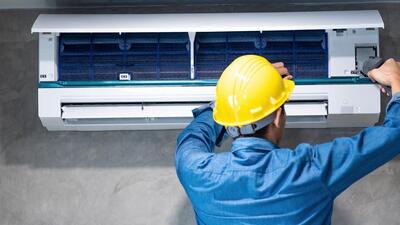
The air conditioner ownership was estimated to expand ninefold by 2050. (Shutterstock)

Nearly 10% of electricity demand was coming from space cooling requirements. “Over the past five decades, India has witnessed over 700 heatwave events, which have claimed over 17000 lives. Fuelled by its geographic and meteorological conditions, air conditioner ownership in India has been steadily rising with growing incomes, tripling since 2010 to reach 24 units per 100 households,” said the IEA’s World Energy Outlook.

We're now on WhatsApp. Click to join.

IEA said there is a sharp increase in electricity consumption as temperatures cross the 25°C. By 2050, India’s total electricity demand from residential air conditioners in the current policy scenario will exceed total consumption in the whole of Africa.

In the scenario India aspires to be in such as becoming carbon neutral by 2070, electricity demand for air conditioners will be nearly 15% lower in 2050 compared to current policy as a result of increased use of energy-efficient air conditioners and thermal insulation in buildings. “This reduction itself is larger than the total electricity generation by several countries today, such as that of the Netherlands,” IEA said.

Implementation of building codes, efficient appliances, and the adoption of demand response measures enable the same cooling needs to be met with less energy in the policy scenarios India aspires to. “Although solar PV matches well with daytime cooling needs, cooling demand is also significant in India during the late evening and at night. Lowering cooling demand through energy efficiency policies therefore reduces the need for investment in batteries or expensive standby generation capacity, and thus helps to integrate renewables more cost-effectively,” IEA said.

IEA said India has since 2000 brought electricity to 810 million people, larger than the population of the European Union and the United States combined. India has also brought clean cooking access to 655 million people since 2000, although 430 million people continue to live in households that use traditional biomass.

Over the past five years, solar PV has accounted for nearly 60% of new generation capacity. India has had the single largest light-emitting diode (LED) adoption campaign in the world, with around 370 million LEDs distributed through the UJALA scheme by 2023. India has also achieved self-sufficiency in petroleum refining capacity despite being a net crude oil importer, although certain petroleum products continue to be imported.

In the current policy scenario, India will have the largest energy demand growth of any country or region in the world over the next three decades. “Although India’s population growth has slowed to reach replacement levels, its urban population increases by 74%. and per capita income triples by 2050. Industrial output expands rapidly, for example through a tripling of output of iron and steel, and doubling of cement, plus there is a ninefold increase in residential air conditioner ownership by 2050,” IEA said.

The IEA’s World Energy Outlook referred to an energy system in 2030 in which clean technologies play a significantly greater role globally. This includes almost 10 times as many electric cars on the road worldwide, solar PV generating more electricity than the entire US power system does currently, renewables’ share of the global electricity mix nearing 50%, up from around 30% today, heat pumps and other electric heating systems outselling fossil fuel boilers globally, and three times as much investment going into new offshore wind projects than into new coal- and gas-fired power plants. “All of those increases are based only on the current policy settings of governments around the world.”

IEA said if countries deliver on their national energy and climate pledges on time and in full, clean energy progress would move even faster. “However, even stronger measures would still be needed to keep alive the goal of limiting global warming to 1.5 °C,” it added.

IEA executive director Fatih Birol said the transition to clean energy is happening worldwide and it is unstoppable. “It is not a question of if, it is just a matter of how soon – and the sooner the better for all of us.”

"Exciting news! Hindustan Times is now on WhatsApp Channels Subscribe today by clicking the link and stay updated with the latest news!" Click here!
Get Latest India News along with Latest News and Top Headlines from India and around the world

Adblock test (Why?)


Air conditioner ownership in India increased 3-fold since 2010 due to rising heat - Hindustan Times
Read More

Monday, October 23, 2023

JSW readies for CBAM era with 4 mt green steel unit | Mint - Mint

NEW DELHI : JSW Steel Ltd, India’s second-largest maker of the alloy, plans to establish a green steel manufacturing facility by 2030 as part of its response to the European Union’s (EU’s) Carbon Border Adjustment Mechanism (CBAM), said Jayant Acharya, joint managing director and chief executive.

“We are looking to set up a lower carbon-emitting facility for steel in the western part of India, subject to board approval. With this, we will be able to provide low-carbon steel for both the international and domestic markets," Acharya said in an interview.

“It will have a capacity of 4 million tonnes (mt), and the plan is to start production by 2030. We are trying to complete it in two parts. We will do phase I (up to 2 mt) just before 2030, and the remaining construction will be going on and may spill over by one or two years."

However, Acharya did not divulge the funding outlay for the project or the timeline for project approval. “I cannot share anything more on the project. We will be seeking board approval."

The EU’s CBAM transition, in effect from 1 October to 31 December 2025, will require companies to furnish extensive production and emission data for goods destined for the EU. On 1 January 2026, the tax phase of CBAM will begin. Importers will be required to purchase CBAM certificates to cover the embedded emissions of their products. The CBAM will be applied to a limited number of goods initially, including cement, iron and steel, aluminium, fertilizers and electricity, but the list will subsequently be expanded to cover all goods.

During this transition period, the EU aims to create a pilot and learning phase involving all stakeholders, such as importers, producers and authorities. This phase will allow the EU to gather valuable data on embedded emissions, which will help refine the methodology for the definitive phase.

JSW’s investment for the facility will be in addition to the ₹10,000 crore the company had announced for its green energy transition plans, Acharya added.

As part of its ₹10,000 crore brownfield expansion plan, the firm plans to increase capacity from the current 28 mt to 50 mt by 2050. “The (proposed) green steel unit will be separate from the ₹10,000 crore electric arc furnace plant based on direct reduced iron (DRI) technology," he said.

The company is also in the process of adding 8.5 mt within two years to reach a capacity of 37 mt, Acharya said.

On Friday, JSW Steel reported a ₹2,773 crore profit for the September quarter from a loss in the year earlier. Consolidated operating revenue rose 6.71% from a year earlier to ₹44,584 crore amid robust domestic demand.

Acharya said the Israel-Palestine war would have an impact on global demand, but domestic demand will remain robust as India continues its nation-building process. “I feel that the GDP (gross domestic product) to steel, structurally, will be very strong in India because this is the nation-building phase for the country."

“With infrastructure building picking up, manufacturing, energy transition and very strong consumption, we will remain in double-digit for steel, which means that incrementally we will add 10-12 mt this year. Thereafter, we will be adding 12-13 MT every year; that is, in seven years, up to the end of this decade, we will be adding more than 100 mt. The capacities which are going to come up in India will be for the domestic market."

"Exciting news! Mint is now on WhatsApp Channels 🚀 Subscribe today by clicking the link and stay updated with the latest financial insights!" Click here!

Related Premium Stories

Catch all the Corporate news and Updates on Live Mint. Download The Mint News App to get Daily Market Updates & Live Business News.
More Less

Updated: 24 Oct 2023, 12:04 AM IST

Adblock test (Why?)


JSW readies for CBAM era with 4 mt green steel unit | Mint - Mint
Read More

Nifty 50 tumbles 1.34%, largest intraday drop since March 2023 – key reasons | Mint - Mint

The Indian stocks experienced a dramatic downturn in Monday's trade, marking one of the bleakest intraday performances of the year. The Nifty 50 index plunged by 1.34% to reach a seven-week low at 19,281, registering the largest intraday drop since March 2023.

Out of the 50 stocks within the index, 48 concluded the session in the red, with LTI Mindtree being the biggest loser, experiencing a nearly 4% decline. It was followed by Adani Enterprises, Hindalco Industries, Adani Ports & SEZ, UPL, JSW Steel, Tata Steel, TCS, Tata Motors, IndusInd Bank, HDFC Life Insurance Company, Grasim Industries, Wipro, and Coal India, all recording losses ranging from 2% to 3.6%.

In 2023, the Nifty 50 has suffered a decline of over 1% on more than 11 occasions, with January 2023 having the most instances of such fall.

Month  Fall (%)
January 27, 2023 1.61%
February 22, 2023 1.53%
March 13, 2023 1.49%
October 23, 2023 (Today) 1.34%
January 25, 2023 1.25%
July 21, 2023 1.17%
September 20, 2023 1.15%
August 02, 2023 1.05%
January 04, 2023 1.04%
January 10, 2023 1.03%
May 05, 2023 1.02%
Source: Tradingview  

According to analysts, the sharp drop in today's trade was attributed to several factors exerting downward pressure on investor sentiment. One key driver of this market turmoil was the escalating yields of US government bonds, which sparked concerns among investors.

Vinod Nair, Head of Research at Geojit Financial Services, said, "Despite the healthy performance of private banks and marginal reductions in oil prices, investor confidence remained pessimistic, and a widespread consolidation persisted in the domestic markets. The global markets echoed the same trend, as the unrest in West Asia has the potential to spiral further. Increased apprehensions surrounding prolonged elevated interest rates fueled a continued upward movement in the US 10-year yield.

"Amid worries over moderation in growth on account of elevated interest rates and higher energy prices, heightened risk aversion was witnessed in the Indian mid- & small-cap space, banks, metals, and energy stocks. While a period of consolidation in the short term seems certain, the extent of this phase will be shaped by global factors," he added. 

Why Indian stock market is falling today — explained with 5 reasons

On the technical front, Rupak De, senior technical analyst at LKP Securities, said," The bears have maintained a strong grip on the index, resulting in significant selling pressure. This pressure led to a breakdown of the key support level at 19500. With support at 19500 breached, the next significant support level was at 19200. If the index fails to sustain above this level, it may experience further declines towards the 19000–18000 range.

"The overall sentiment for the index remains bearish. As long as the index stays below the 19600 mark, the view remains bearish, and any upward movements are viewed as selling opportunities," he stated. 

Disclaimer: The views and recommendations given in this article are those of individual analysts. These do not represent the views of Mint. We advise investors to check with certified experts before taking any investment decisions.


"Exciting news! Mint is now on WhatsApp Channels 🚀 Subscribe today by clicking the link and stay updated with the latest financial insights!" Click here!

Related Premium Stories

Catch all the Business News, Market News, Breaking News Events and Latest News Updates on Live Mint. Download The Mint News App to get Daily Market Updates.
More Less

Updated: 23 Oct 2023, 06:58 PM IST

Adblock test (Why?)


Nifty 50 tumbles 1.34%, largest intraday drop since March 2023 – key reasons | Mint - Mint
Read More

MC Interview| Will be watchful of steel supplies getting diverted to India as demand remains strong: JSW... - Moneycontrol

Jayant Acharya, joint managing director and chief executive officer of JSW Steel.

Jayant Acharya, joint managing director and chief executive officer of JSW Steel.

JSW Steel expects India demand to remain strong and plans to increase its capacity in line with it, driven mainly by brownfield expansion that will be funded by internal accruals, Joint Managing Director and Chief Executive Officer, Jayant Acharya, said in an exclusive interview with Moneycontrol. Acharya said the company is on track to spend Rs 20,000 crore in capex for 2023-24.

The Sajjan Jindal-led steel major reported a net profit of Rs 2,773 crore in Q2FY24 on robust domestic demand, as against a loss reported in the same quarter a year ago. While the company is preparing to tap the opportunity in the domestic market, it is also cautious that this opportunity may increase competition from global steelmakers who may also look at supplying to India. Acharya said JSW Steel will continue to look at assets to secure fuel and raw materials.

Edited excerpts of the interview:

The company reported strong numbers in Q2FY24 but while India performance was strong, the US market was a bit of a dampener. How did the quarter pan out?

The second quarter saw very strong volume growth, primarily driven by the Indian domestic demand. We saw total consolidated sales of 6.34 million tonne; the domestic demand was a big enabler. We saw a growth of 18 percent in domestic sales in the quarter on a QoQ (quarter-on-quarter ) basis. Our absolute EBITDA numbers have gone up by about 12 percent QoQ to Rs 7,886 crores, driven by a very strong domestic demand in infrastructure, manufacturing, renewable energy, consumption and services. In spite of challenges in the global economic environment, India has continued to outperform. We see that during the medium term, India will continue to do well. During this nation-building phase, India will require a lot of steel and the steel demand will, therefore, structurally reflect a good GDP growth. We see 8-10 percent growth in steel demand in India in the medium term.

Coking coal prices increased in the second quarter but were still lower than the highs seen earlier in the year. In Q2FY24, lower fuel costs benefitted the company’s bottomline. What’s the fuel cost outlook? What’s your strategy for securing supplies?

Coking coal prices have gone up substantially in the last 1.5-2 months. The cost of the coking coal will partly flow into Q3 and Q4. However, we do not think that this is sustainable and it will moderate; some moderation has been seen in the last few days. Also, the benefit of the price increases which had taken place in August, September and part of October will flow into October-December and would offset some of the cost increase. Therefore, going forward, I feel that aided by improved volumes during Q3, JSW Steel will continue to do well. As far as sourcing of coal is concerned, we continue to look at various sources internationally. We are also developing the domestic mines, which we had won in the last auction in India, and that would get us some more clean coking coal in the next 1.5 years or so. We will continue to look for strategic assets, either in terms of a stake or alliance, as long as the quality of coking coal meets the objective and as long as the commercial value makes sense.

How is the price outlook for the rest of the year? Do you see some margin pressure coming in in the third and fourth quarter of the fiscal?

Demand in H1 has been extremely strong. India demand was 14.8 percent; that has been the main driver. Therefore, the prices in the country also went up, inventories were restocked. I think the momentum of the demand will continue in H2. Seasonally, this is a better half and we should see better numbers. Our expansion in BPSL (Bhushan Power & Steel Ltd), which is now coming on stream in the second half, will benefit the volumes.

We had some maintenance shutdowns in our existing operations in Q2, which are all behind us. So we should see better capacity utilisation in our existing operations as well; volumes will be better in Q3 and Q4. In absolute numbers, we will certainly be better in terms of volume. It's very difficult to forecast the price or the cost of coking coal. That's why I gave you the input that while coking coal prices have gone up and it will reflect in the cost, it's impact will be offset to some extent by the price increase, which has taken place in August, September and part October.

What are you doing to secure coking coal supplies? Are you looking at any assets closely?

We are engaging with various asset holders. We are continuing to look at good quality coking coal, which can be blended at our works. But that, I think, we continue to scan the environment. We haven't yet found anything which is fitting well and near closure. If there is anything which comes up closer to time, we will look at it and announce.

Is there a change in plan with respect to Canada’s Teck Resources arm given the deterioration in relations between India-Canada? (Context: The company plans to buy a 20-40 percent stake in Elk Valley Resources Ltd, a metallurgical coal unit of Teck Resources.)

Our focus has not changed. I think the India-Canada situation will improve over time. We will continue to engage in discussions with the company and if there is value and merit in the asset, we will look at it.

Is there a timeline for concluding this deal?

It is difficult to say because the conclusion will have to happen on both sides. We will know this over time.

The geopolitical situation is becoming more unpredictable with disruptions like the Israel-Hamas war. What impact do steelmakers expect on global markets? 

If you look at the raw material prices today, the way the prices have moved in the last few months, it should reflect in the steel prices. So we would probably see some improvement in international steel prices going into the next two quarters. We also expect that the coking coal prices will moderate because of the kind of price increase, of more than $100 in the last one-and-a-half months, is high. I think some moderation has taken place in the last few days. Having said that, it's difficult to forecast the price. But I would say that the demand in the country in the second half, as I mentioned, will continue to be seasonally strong, and that would support a stable pricing environment.

JSW Steel has been focussing on the high margin value-added and specialised steel products. How is the price and demand outlook in that segment?

Our value-added and special products sales have gone up; in this quarter, we have done 62 percent of value-added and special products. It has grown by 15 percent to 3.8 million tonne plus. We continue to focus and develop clients in this category. Various developments with various clients are going on and R&D activities are going on. We will continue to focus on this area and that is yielding good results. We are expanding our capacities. We are making sure that our content in terms of the product mix has more value-added products which are required in the country and the world. Whether it's automotive or energy transition, or lower carbon emission steels, we continue to focus on those.

What sectors are driving steel demand in India? 

Infrastructure is a very big demand driver, the government push on infrastructure has especially been very productive. Manufacturing and energy transition segments have done well. We are seeing improvement in railways, in terms of rolling stocks and rail network. Warehousing, data centres playing into the demand. So we are seeing very broad-based demand across sectors. We see that infrastructure, manufacturing and consumption will be very strong demand drivers.

The government’s push on infrastructure has been a big driver. Are you anticipating a slowdown as we get into election mode?

In the medium term, an election year will not matter very much. The Government of India is very focused on the development of the nation. Therefore, infrastructure building is a very key factor of that development. The overall infrastructure pipeline, which we have seen frontloading in the first half, will continue to hold strong in the remaining few months as well.

You have said the company is looking at brownfield expansion and acquisitions. Reports suggest you are looking at some of the mines and assets of Vedanta that are on the block. Please share some perspective on that as well.

While we will  continue to have various options as we grow, our focus will remain to grow our brownfield capacities. As we had indicated earlier, our brownfield capacity expansion in Vijayanagar is on track and by March 2024, the 5 million tonne expansion should get completed. The BPSL (Bhushan Power and Steel Ltd) expansion is also on track and that should add 1.5 million tonne by the end of March 2024. We expect some de-bottlenecking at Vijayanagar again to play out in 2025 that would add capacities and take it to 37 million tonne in India and 38.5 million tonne globally. That would make JSW Steel one of the largest players globally as well. Going forward, we have opportunities of brownfield expansion in the existing locations; our focus would be to do that first because we have no specific investment cost in these areas. We will look at assets if they make strategic and economic sense, including any which may come up during this period of time.

The company had announced a capex of Rs 20,000 crore for FY24, how do we stand on that?

We have spent close to Rs 8,000 crores in the first half of this year and we continue to be focusing on this capex because all our projects, which are critical in nature, will continue to be monitored so that they are delivered on time. We will be in the range of Rs 20,000 crore for this year. Going forward, we will allocate capex prudently in a way that is value accretive for the shareholders. The efficiency of our executions has always been strong and that will deliver better shareholder value as we go forward.

How is your joint venture (JV) with JFE Steel in Japan coming along? 

The project right now is in various stages of looking at equipment and very much on track. We expect to complete that project in two and a half to three years’ time. As you know, CRGO (cold-rolled, grain-oriented) is a very closely guarded technology. We have the technology and we are looking at making a joint venture in India since there is very good demand. As we get more and more renewable energy and energy consumption, we will see CRGO demand increasing. Therefore, this capacity is a beginning and we expect to increase the capacity of CRGO in the coming few years.

Where do we stand with respect to debt levels and how is it likely to be for the rest of the year? 

We have closed the quarter with a debt of a little more than Rs 69,000 crores, primarily on the merger of JSW Ispat Special Products (formerly Monnet Ispat & Energy). However, our ratio of net debt-to-EBITDA has improved. We are at 2.52 by the close of this quarter as against 3.14 in the last quarter. We expect that while we allocate capital for growth, we will continue to be near this net debt-to-EBITDA ratio of 2.5. Our capex will be mainly driven by internal accruals. We will continue to refinance some of our debts and balance it out.

With the calendar year nearing its end and half of the financial year over, what do you see as the biggest challenge for the steel industry and how is JSW Steel planning to deal with it?

I think we are well placed. We are lucky to be in a country where the economic momentum is quite strong. Going forward into this decade, we see the economic momentum continuing; steel demand will also be very strong. I think structurally we see that the GDP to steel elasticity will be very high. During the nation building phase in Japan and China, we have seen an elasticity of 1.5. And if you look at the last two years, we have seen a very strong elasticity of steel demand to GDP of 1.8 and also in the last year. We feel that during this decade, steel demand will be good. Even if we take an 8-10 percent growth, we will continue to add 10 to 12 million tonne of demand every year incrementally. And by the end of this decade, that would add close to 100 million tonne of steel demand. So, we would need to increase capacities in India and that's exactly what we are focusing on. Our main strength is also an area where we need to be concerned about because the global situation, as we discussed, is a little challenging. We should be watchful of any trade flows, which are getting diverted to India because of a good demand in India and weaker demand elsewhere. We are vulnerable to some imports. So we will continue to watch and track that.

With carbon taxes on steel kicking in soon, are you having sleepless nights?

We are preparing quite well. The Government of India is preparing the blueprint quite well; there are 13 task forces that have been formed for improvement on various parameters. Our energy transition is driven by the Renewable Purchase Obligation and energy efficiencies are improving. Hydrogen Mission is another focus area. We already have the scheme of Perform, Achieve and Trade in place. Carbon capture and its use will be another area which we will continue to look at in India. We are taking equally good initiatives on our side. Circularity in terms of using more scrap and gasses and any generation of waste within the system. We will continue to look at disruptive technologies including hydrogen.

Every country has a different pathway. So we need to collaborate more to define and measure carbon. I think the measurement metrics will need to be defined by the world as a whole and we need to define the scope and boundaries better as we go into this regime of carbon taxes and carbon border management.

Adblock test (Why?)


MC Interview| Will be watchful of steel supplies getting diverted to India as demand remains strong: JSW... - Moneycontrol
Read More

Govt’s fiscal consolidation plan to aid private sector, boost capex revival - Moneycontrol

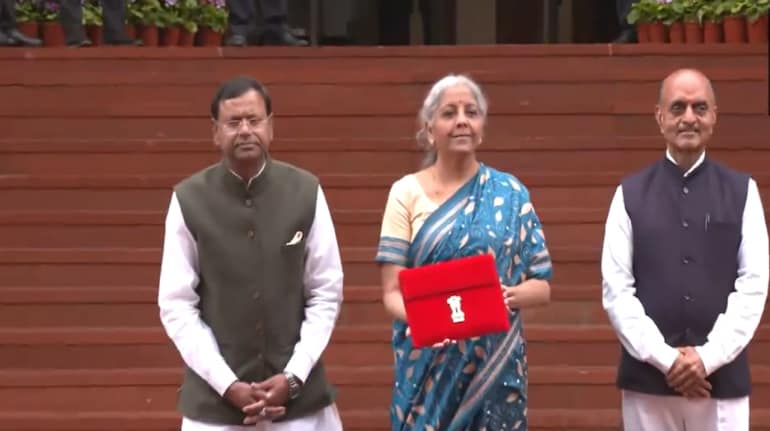
Finance Minister Nirmala Sitharaman The 2024 Interim budget is based on the robust framework of “Viksit Bharat by 2047.” Driving this gr...