Rechercher dans ce blog

Wednesday, March 22, 2023

Govt proposes to sell up to 3.5% stake in Hindustan Aeronautics - Business Standard

India is planning to sell up to 3.5% stake in aerospace and defence company Ltd this week in a deal that could fetch the government Rs 2,867 crore ($347.16 million), an exchange filing showed on Wednesday.

So far, the government has mopped up Rs 31,110 crore by selling its shares in state-run firms as against its target of Rs 50,000 crore for the financial year ending March 31.

The Indian government stares at missing its divestment target for 2022/23 as it plans to put on hold the part sale of its stake in Hindustan Zinc (HZL) unless the company calls off the nearly $3 billion cash acquisition of two Vedanta Group subsidiaries.

The floor price for the stake sale is set at 2,450 rupees apiece, at a discount of 6.7% to Wednesday's close. The government owns a 75.15% stake in HAL, according to Refinitiv Eikon. The government plans to sell a 1.75% stake on March 23-24, and has the option to sell 1.75% more stake if needed.

Divestments in state-owned firms is a key revenue-raising measure that helps government to spend on infrastructure-building.

(Only the headline and picture of this report may have been reworked by the Business Standard staff; the rest of the content is auto-generated from a syndicated feed.)

Adblock test (Why?)


Govt proposes to sell up to 3.5% stake in Hindustan Aeronautics - Business Standard
Read More

RIL announces launch of ‘affordable’ FMCG products - BusinessLine

MUMBAIReliance Industries announced the launch of a range of home and personal care products, including bathing and washing soaps, toilet and floor cleaners and laundry detergents.

While the company did not disclose the price points at which the products are being launched, sources indicated that they are at significant discounts to the existing products. A 100 gm bathing soap bar, for instance, will be available at about 30 per cent discount to a comparable product in the market.

This is a pan-India launch that its subsidiary Reliance Consumer Products is undertaking through omni channels of distribution across the country over the coming months. 

“Our ambition is to help every Indian household get access to quality products at reasonable price points. This range of home and personal care products boasts high efficacy with superior formulation. These have been developed keeping “Real India” consumer problems at their core,” the company said in a statement. It added that the portfolio expansion reaffirmed and supported the company’s aim to provide Indian consumers with high-quality FMCG products at affordable prices.

Disrupting factor

RIL’s entry into the over $110 billion FMCG segment - dominated by well-entrenched global players such as Hindustan Unilever, Nestle, Procter & Gamble - is being keenly watched by everyone. The company has a reputation of disrupting sectors in which it forays mostly by steep discounting in the initial stages.

Building up FMCG brands is a time-consuming process and it takes a long time to create brand recall and also shift customer loyalties. The Mukesh Ambani-owned company has resorted to the strategy of ‘buying’ over ‘building’ to scale up the business and acquire brands and products that already have a presence in the market.

The company has already launched other items in the FMCG category such as cold drinks under Sosyo Hajoori, confectionaries by Lotus Chocolates, and Sri Lanka’s biscuit brand Maliban. Earlier this month it announced the re-launch of Campa Cola.

Among the portfolio of products that it intends launching are Glimmer beauty soaps, Get Real natural soaps, Puric hygiene soaps, Dozo dishwash bars and liquids, HomeGuard toilet and floor cleaners and Enzo laundry detergent powder, liquid, and bars. Real and Puric spas are in the Grade 1 category, with a total fatty matter of 76 per cent. Higher the fatty content, the more superior the quality.

Last year in August, Isha Ambani, director of Reliance Retail Ventures had announced the company’s entry into the FMCG business and then in December the company announced the launch of packaged goods brand ‘Independence’ in Gujarat, offering a range of staples, foods, and essential items.

Adblock test (Why?)


RIL announces launch of ‘affordable’ FMCG products - BusinessLine
Read More

US Fed raises rates by quarter point to fight inflation despite banking sector crisis - Moneycontrol

The US Federal Reserve on March 22 announced a quarter point-hike in interest rates, refusing to lower guard on a persistently high inflation but assured markets battered by a banking crisis that it has enough firepower to avert a contagion. The Fed increased its funds target rate to a range of 4.75-5 percent, a level last seen prior to the 2007-08 global financial crisis. The hike in rates, which came broadly on the expected lines, will further add to the cost of funds and refuel the risks of a potential recession that will have rippling effects not only in the world’s largest economy but elsewhere on the globe. The rate hike was necessitated by a sticky high inflation. The Fed, in its statement, noted that the US banking system is "sound and resilient", but the recent developments in the banking sector "are likely to result in tighter credit conditions for households and businesses and to weigh on economic activity, hiring, and inflation". Fed policymakers projected rates would end 2023 at about 5.1 percent, unchanged from their median estimate from the last round of forecasts in December. The median 2024 projection rose to 4.3 percent from 4.1 percent. The hike and forecasts suggest policymakers remain firmly focused on bringing down inflation to their 2 percent goal, indicating they see rising prices — especially based on recent data — as a bigger growth threat than the bank turmoil. It also projects confidence that the economy and financial system remain healthy enough to withstand the string of bank collapses. The Fed action came days after Silicon Valley Bank and at least two other regional banks failed after mounting losses on their bond portfolio and large-scale fund withdrawals from depositors cracked their balance-sheets, forcing regulators to shut down these entities. The banking crisis kicked off a major sell off across stock markets somewhat triggered the downfall of global banking major Credit Suisse, which was merged with UBS in a Swiss-government brokered deal. The Fed assured markets that it has enough firepower to handle the banking crisis and reiterated that the broader banking sector is reinforced with adequate safeguards in terms of capital adequacy. In the aftermath of the Credit Suisse debacle, global central banks led by Fed had announced a dollar swap facility to ensure enough liquidity in the system. The Fed’s rate hike will have ramifications on the policy rates of other central banks including the Reserve Bank of India (RBI), whose Monetary Policy Committee (MPC) is set to meet in April to decide the next course of policy action. With Bloomberg inputs

Adblock test (Why?)


US Fed raises rates by quarter point to fight inflation despite banking sector crisis - Moneycontrol
Read More

Zomato shares: Why HSBC feels the stock could rise 64%; time to buy? | Mint - Mint

Shares of food delivery major Zomato rose nearly 1 per cent in Wednesday's trade after analysts at HSBC Global Research said they expect the stock to hit ₹87 going ahead, implying an upside potential of 64 per cent from the current levels.

Zomato has lost over 11 per cent in the year-to-date period and has underperformed the S&P BSE Sensex. Despite this underperformance, HSBC has maintained a 'Buy' rating on the stock.

The food delivery industry has slowed down sharply in recent months and may slow down further in 4Q23, but the brokerage expects Zomato to reclaim its market share.

The brokerage said it values Zomato using a DCF model, employing a WACC of 10.5 per cent based on our assumptions of a risk-free rate of 2 per cent, an inflation differential of 2.5 per cent, a beta of 1.1, and a market risk premium of 5.5 per cent (all unchanged).

"Our DCF model also incorporates our Blinkit estimates. We believe consensus expectations are now a lot more realistic although they still need adjustments to bring the medium-term growth rate forecasts closer to 10 per cent for the food delivery GOV over the longer term, which, in our view, is achievable," the note said.

Moreover, analysts at HSBC said they are not overly negative on the Blinkit business and expect positive surprises on GOV growth and profitability over the coming quarters.

On reclaiming some of the market share

Zomato has started to reclaim some of the market share it lost in 2HCY22, thanks to the launch of Zomato Gold, the brokerage said.

It expects Zomato to continue to gain market share from Swiggy, led by an aggressive go-to-market strategy. "We now expect Zomato’s share to improve to 57% in FY24e. This would mean, notwithstanding the loss in 2022, that Zomato has gained 13 ppts in terms of market share from Swiggy since FY20," it said.

"We assume the hyper-growth expectations of the Street have now been suppressed, although current muted growth is likely undershooting the long-term trend. We expect FD Gross Order Value (GOV) to grow c9% y-o-y in 4QFY23, below our medium-term expectation of 15%," HSBC said, adding this seems disappointing, but there are several silver linings for Zomato investors.

In the coming quarters, as the company absorbs the impact of Zomato Gold, EBITDA margins should continue to improve. On top of this, Swiggy continues to burn a lot more cash than Zomato, the note said.

As the execution bias swings in favour of profitability, industry dynamics will be more conducive for Zomato as it looks to expand margins.

Blinkit could offer significant value-add over the long term

With regard to Blinkit, the brokerage believes that its grocery business is viable at certain economies of scale and business construct. It said that Blinkit remains under appreciated by the Street.

“Hyperlocal/Qcommerce is likely to see strong growth for a few years due to low penetration and stabilising competition. Blinkit’s current GOV run-rate is $1bn. In FY25e, the business could easily achieve GOV of $2bn, which even at 0.5x GOV could provide $1bn to the stock value (20-25% of its current EV). With increasing volumes we see the potential for quite an improvement in profitability as well," it said.

Downside risks

1. Growth in FD transacting users may be slower than expected

2. Zomato's equity investments in start-ups may not generate value

3. Competition in grocery and other hyperlocal areas may outperform Zomato and its investee companies such as Blinkit

Disclaimer: The views and recommendations made above are those of individual analysts or broking companies, and not of Mint. We advise investors to check with certified experts before taking any investment decisions.

Know your inner investor Do you have the nerves of steel or do you get insomniac over your investments? Let’s define your investment approach.

Take the test
Catch all the Business News, Market News, Breaking News Events and Latest News Updates on Live Mint. Download The Mint News App to get Daily Market Updates.
More Less

Adblock test (Why?)


Zomato shares: Why HSBC feels the stock could rise 64%; time to buy? | Mint - Mint
Read More

Tuesday, March 21, 2023

Emirates president Tim Clark says India's bilateral agreements may cost airlines $900 million in revenue - Moneycontrol

Tim Clark, the head of flag carrier Emirates, said that Indian airlines are missing out on revenues to the tune of $800-900 million due to limited bilateral agreements between India and Dubai. Clark, while speaking at the CAPA  India Aviation Summit, said that the government of Dubai has approached the Indian government to liberalise air travel by easing bilateral air service agreements, but to no avail. He added that the Dubai has asked India to approve 50,000 extra seats per week between Dubai and India, but the response from the New Delhi has been dismissive till now. "You can’t expect to grow and not allow others to come in. You’ve got to have an open skies agreement with most. It is such a big market. It is not as if the cake is static. The cake is growing,” Clark said at the event. ALSO READ: Indian carriers to report $1.6-1.8 billion consolidated loss in FY24: CAPA India and Dubai permit 66,000 seats per week between the two to be operated by the airlines of the two countries. Dubai wants that to be enhanced because the country's two carriers -- Emirates and FlyDubai-- have together reached that limit. The debate of increasing airline seats between India and Dubai has been going on for the last five years as a large number of Indian travelers use carriers such as Emirates to transit to Europe and the US. The last increment in flying rights happened in 2013 when the government agreed to increase it by four times from 13,330 seats to 50,000 seats per week. Hence, these carriers have been pushing for a rise in flying capacity between India and West Asia or the Middle East. However, Indian carriers fly directly to Europe and the US and are not keen on expanding flying capacity to West Asia, as more flights to transit hubs in the middle east may hit the passenger load factor of their direct flights. Emirates has a fleet of 262 wide-body planes which are instrumental in flying on long-haul routes above six hours. The head of Emirates also said that he would have liked to see Air India place a larger order for wide-body aircraft as part of its latest mega order. "I was concerned that Air India ordered only 70 wide-bodies & not the other way around," Clark further said. He added that wide-body aircraft play an important part in creating superhubs and have better fuel efficiencies than narrowbodies. Clark, however, said that despite being separate airlines, there was no rivalry between Emirates and Indian carriers adding that he did not look at Air India as an adversary. “We’re not here to threaten, we’re here to add value to the Indian economy and the citizens of India by providing a range of products other carriers have not been able to do by operating to destinations where we know the Indian demand is,” he added. Clark also said that India was a big talent pool for the likes of Emirates and that the country's growing aviation market will be beneficial for the world in the future. He added that nearly 20 percent of Emirates staff was made up of Indian citizens. Clark also said that he is open to working with the Indian government to create a global aviation hub. "If anybody wants to talk to me about how you establish an international hub, I'll bring it on, I don't mind. Integration of customs, immigration, police, airport authorities," the Emirates head said. He also added that the current climate of high airfares is unlikely to change anytime soon. Clark said that customers are willing to pay more for air travel, especially long-haul air travel. "For every passenger that flies today and every seat we offer, there are 5 people to buy it. People are prepared to pay for services," Clark said.

Adblock test (Why?)


Emirates president Tim Clark says India's bilateral agreements may cost airlines $900 million in revenue - Moneycontrol
Read More

Monday, March 20, 2023

NSE Co-Location Case: Supreme Court Declines Stay To SEBI - BQ Prime

Adblock test (Why?)


NSE Co-Location Case: Supreme Court Declines Stay To SEBI - BQ Prime
Read More

Amazon starts 2nd round of layoff, fires 9000 employees - India Today

Amazon has announced second round of layoff and revealed that it is firing as many as 9,000 employees. The company has already laid off 18,000 workers earlier this year.

By Ankita Garg: Amazon has announced the layoff of 9,000 more employees. The company's CEO Andy Jassy has sent a message to the impacted employees, saying that Amazon is going through a difficult time and that it will have to take this step to save costs. This is not the first time that the e-commerce giant is sacking employees as it eliminated as many as 18,000 workers in January this year. This basically means Amazon has fired a total of 27,000 people.

advertisement

"We intend to eliminate about 9,000 more positions in the next few weeks—mostly in AWS, PXT, Advertising, and Twitch. This was a difficult decision, but one that we think is best for the company in the long term," Jassy said in the email that was sent to employees.

But why is Amazon firing thousands of employees again? Well, the company's CEO has explained that Amazon overhired people in the past few years and now, it will have to sack employees to save costs and use resources carefully because of the economic downturn. He also asserted that the move would help the company in the long run and use the saved money for better things.

"Given the uncertain economy in which we reside, and the uncertainty that exists in the near future, we have chosen to be more streamlined in our costs and headcount," he said. Jassy further explained that the company didn't announce both layoffs at once because not all the teams were done with their analyses in the late fall and so, the second round of layoffs is happening now.

"As our internal businesses evaluated what customers most care about, they made re-prioritization decisions that sometimes led to role reductions, sometimes led to moving people from one initiative to another, and sometimes led to new openings where we don’t have the right skills match from our existing team members," he added. This led Amazon to cut 18,000 jobs in January and now that it has completed the second phase of planning this month, the company has fired an additional 9,000 roles.

The CEO has asserted that the company aims to complete the latest layoff process by mid to late April. He also confirmed that Amazon will support those employees who have been laid off. It is promising to provide packages that include a separation payment, transitional health insurance benefits, and external job placement support.

Adblock test (Why?)


Amazon starts 2nd round of layoff, fires 9000 employees - India Today
Read More

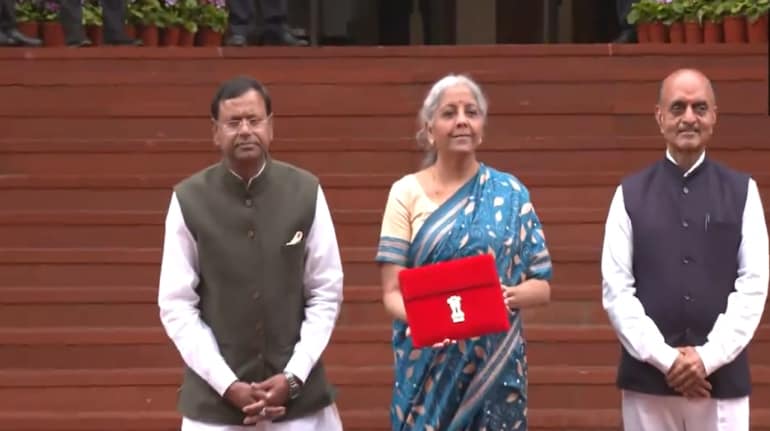
Govt’s fiscal consolidation plan to aid private sector, boost capex revival - Moneycontrol

Finance Minister Nirmala Sitharaman The 2024 Interim budget is based on the robust framework of “Viksit Bharat by 2047.” Driving this gr...