Rechercher dans ce blog

Friday, June 2, 2023

SBI Life to acquire Sahara India's Life Insurance business | Mint - Mint

The insurance regulator Insurance Regulatory and Development Authority of India (IRDAI) on Friday said it has decided to transfer the life insurance business of Sahara India Life Insurance Co (SILIC) to SBI Life Insurance Company Ltd (SBI Life).

SBI Life will take over the policy liabilities of around two lakh policies of SILIC, backed by the policyholders' assets, with immediate effect, said the insurance regulator.

IRDAI said that it taken necessary steps to ensure the smooth transition for all policyholders of Sahara India Life Insurance Co (SILIC).

A committee comprising of Member (Actuary), Member (Life), and Member (F&I) has been constituted for implementation of the Order in a timebound manner.

SBI Life has been directed to take adequate steps to reach out to the policyholders of SILIC, with regard to servicing of policies, including setting up of a dedicated cell to address the queries of the policyholders of SILIC, and also publish necessary details on their website.

Sahara India Life Insurance Co. Ltd (SILIC) was granted a Certificate of Registration in 2004 to transact the business of life insurance. However, due to issues on the financial propriety and governance aspects of the insurer, IRDAI had appointed an administrator to manage the business of the insurer in 2017.

Catch all the Corporate news and Updates on Live Mint. Download The Mint News App to get Daily Market Updates & Live Business News.
More Less

Updated: 02 Jun 2023, 07:42 PM IST

Adblock test (Why?)


SBI Life to acquire Sahara India's Life Insurance business | Mint - Mint
Read More

India's forex reserves fall to lowest in a month - Economic Times

India's foreign exchange reserves stood at a one-month low of $589.14 billion as of May 26, the Reserve Bank of India's (RBI) data showed on Friday.

This was the second consecutive week of falling reserves. It fell by $4.34 billion from the previous week.


Reserves had fallen by $6.05 billion in the week ended May 19, the biggest fall in more than three months.
The central bank intervenes in the spot and forwards markets to prevent runaway moves in the rupee.

The changes in foreign currency assets, expressed in dollar terms, include the effects of appreciation or depreciation of other currencies held in the RBI's reserves.

Foreign exchange reserves include India's Reserve Tranche position in the International Monetary Fund.
The rupee rose 0.1% in the week ended May 26, having traded in a range of 82.5575 to 82.8500.
The rupee ended at 82.3050 on Friday to record its best week in five.
with inputs

Adblock test (Why?)


India's forex reserves fall to lowest in a month - Economic Times
Read More

Thursday, June 1, 2023

SGX Nifty up 65 points; here's what changed for market while you were sleeping - Economic Times

Equity markets ended lower in a volatile trade on Thursday amid profit booking and negative global cues.

"Investors turned cautious in anticipation of inflationary pressure in the US after raising the US debt ceiling. The US 10-year bond yield inched higher. The market is looking ahead to the trajectory of US interest rates to get more visibility," said Vinod Nair, Head of Research at Geojit Financial Services.


Here's breaking down the pre-market actions:

SGX Nifty signals a positive start
Nifty futures on the Singapore Exchange traded 63.5 points, or 0.34 per cent, higher at 18,627, signaling that Dalal Street was headed for positive start on Friday.

STATE OF THE MARKETS

SGX Nifty signals a positive start
Nifty futures on the Singapore Exchange traded 63.5 points, or 0.34 per cent, higher at 18,627, signaling that Dalal Street was headed for positive start on Friday.
  • Tech View: On daily charts, even though Nifty has corrected in the last two sessions, the pattern of higher tops and higher bottoms seen since the March 2023 lows has not been disturbed. This indicates that the intermediate uptrend remains intact. We expect the Nifty to find support around the previous swing high of 18459 before again resuming the uptrend. Of course, if this support fails to hold, then a further correction is likely.
  • India VIX: India VIX, which is a measure of the fear in the markets, fell 3.13% to settle at 11.60 levels.

US stocks up
US stock indexes closed up on Thursday as signs of slowing wage pressure on inflation raised hopes the Federal Reserve will pause raising interest rates in two weeks, and investors welcomed a vote in Congress to suspend the U.S. debt ceiling.

Asian stocks rise
Asia stocks advanced after a renewed rally in tech giants pushed Wall Street higher ahead of jobs data due Friday as investors assess the likelihood the Federal Reserve will pause interest rate hikes in June.

Oil prices gain
Oil prices rose on Friday in early Asian trade as markets weighed the likelihood of price-supportive OPEC+ production cuts over the weekend amid positive sentiment over U.S. monetary policy and Washington's debt ceiling bill.

FII/DII action
After continuous buying in May, FPIs turned marginal net sellers at Rs 71 crore on Thursday. DIIs, meanwhile, bought shares worth Rs 489 crore.

Rupee
The rupee gained by 33 paise to close at 82.42 against the US dollar on Thursday, as positive macroeconomic data strengthened investor sentiments.

Adblock test (Why?)


SGX Nifty up 65 points; here's what changed for market while you were sleeping - Economic Times
Read More

Govt looking into airfare surge; there are not enough planes given travel demand: Aviation minister Scind - Indiatimes.com

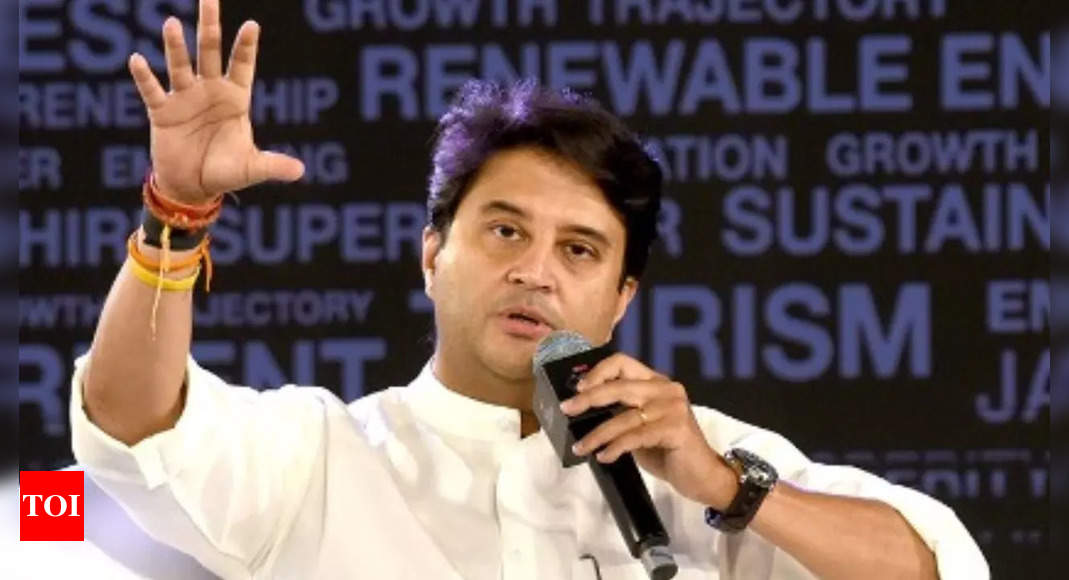
NEW DELHI: Taking cognisance of the surge in airfares on sectors where Go First had a strong presence, Union aviation minister Jyotiraditya Scindia has put together agroup to study the spikes.
“We are doing a full analysis on these routes and we will speak to our airlines to make sure that fares are within a certain level. We will try our best but it’s an issue created by an unforeseen demand-supply imbalance,” he said on Thursday.
For instance, Delhi-Leh return fares had touched Rs 52,000 — as opposed to Rs 52,000 for Delhi-Paris return — some days back in this peak demand season. Scindia identified airports like Srinagar and Puneas being the most affected, with Ahmedabad also hit slightly, for this reason.
“Civil aviation is a deregulated sector. There is no regulator for airfare pricing… There are two dynamics at play today. Seasonal travel periods of crests and troughs that (determine) pricing based on demand. (And) we are dealing with an unusual situation. The sector you talked about used to be serviced by Go First which has applied for NLCT. So there has been a pullback on the 315 routes they were operating on. So there is excess demand on those routes, though we have given those routes to other airlines,” he said.
Scindia pointed out the “vicissitudes” the civil aviation sector has seen, with no passengers and all planes being on ground three years ago to today when there are not enough planes given the travel demand. The reason for inadequate planes is the supply chain issues being faced by aircraft and engine makers like Boeing, Airbus and P&W.
“They are not able to meet the demand for planes, engines. One of the reasons for the current situation is the supply chain issue being faced by PW… I find it rather unpalatable that an airline with a fleet of 58 to 60 has 50% of its planes grounded due to unserviceable (PW) engines... Ironically most of the aircraft on ground (due to engine issues) belong to one manufacturer (PW). That is an issue of concern. We have spoken to that engine manufacturer that India is not a country where we can afford to have our planes on ground especially looking at the demand numbers,” the minister said.
Asked if he felt Go First will fly again, Scindia said: “We had written to the them in the third week of May, seeking their restructuring plans so that we could evaluate the same. They came back with something. We examined the same and identified some loopholes, what they need to work on. Their reply is awaited,” he said.

Adblock test (Why?)


Govt looking into airfare surge; there are not enough planes given travel demand: Aviation minister Scind - Indiatimes.com
Read More

Buzzing Stocks: Coal India, Tata Motors, Maruti Suzuki, Paras Defence & others in news today - Moneycontrol

The Maharashtra Housing and Area Development Authority (MHADA) has issued a list of 15 residential buildings in South Mumbai that are extremely dangerous and required to be vacated immediately. Apart from this, the Brihanmumbai Municipal Corporation (BMC), the Mumbai civic body, has also released a list of over 200 dilapidated buildings where residents have been issued notices to vacate immediately. In all, there are more than 10,000 dilapidated buildings in the city. According to MHADA officials, these 15 buildings in areas including Girgaum, Kalbadevi, Khetwadi, Kamathipura and VP Road are more than 80 years old. There are 545 residents and 121 non-residents in these 15 high-risk buildings. In a statement, the MHADA said, "Regular pre-monsoon survey of old and dilapidated cessed buildings in Mumbai City under MHADA's Mumbai Building Repair and Reconstruction Board (MBRRB) has been completed and this year 15 buildings have been found to be extremely dangerous. These include 7 buildings which were declared as high-risk last year in 2022." Residents reluctant to vacate As per the action taken by MBRRB, 155 resident tenants/ residents have made alternative arrangements for their own shelter. So far, 21 residents have been relocated to transit camps. Every year before the monsoon, the state housing authority carries out a pre-monsoon audit, and based on the outcome, notices to vacate are issued to residents of these ‘dangerous’ buildings. Also read: MHADA lists 21 'extremely dangerous' buildings in Mumbai; residents asked to vacate before monsoon The residents are given free transit tenements built by MHADA. However, several residents refuse to vacate their homes due to location preference. The redevelopment of old dilapidated buildings is a major issue in the city, and time and again there are incidents of building collapse during monsoon. Also read: MHADA lottery 2023: 4,083 apartments on sale in first lottery in 4 years for Mumbai starting at Rs 24 lakh Meanwhile, out of the 226 dilapidated residential buildings in the city issued by BMC, which is India's richest civic body, 35 are in south Mumbai, 65 are in eastern suburbs and the remaining 126 are in western suburbs.  

Adblock test (Why?)


Buzzing Stocks: Coal India, Tata Motors, Maruti Suzuki, Paras Defence & others in news today - Moneycontrol
Read More

Consumer goods companies score big green goals - Economic Times

When Sanjiv Mehta joined Hindustan Unilever as its managing director in 2013, he said he had 'opted' for an India stint as Unilever's corporate purpose was in sync with his own. A decade later, on the verge of his retirement, numbers bear witness to his boost to the company's green quest.

The maker of Surf and Dove decarbonised operations with 97% reduction in CO2 emissions per ton of production against the 2008 baseline. It has been plastic neutral since 2021. About 95% of its paper and board in packaging, 82% of tomatoes and 69% of tea came from sustainable sources. It also delivered a combined water potential of over 2.6 trillion litres.


"This is more than the quantity required to meet the drinking water needs of India's population for nearly two years," said Mehta. "Sustainability and business success are not mutually exclusive; they are two sides of the same coin."
Like Mehta, several consumer companies are increasingly try to link environment and societal purposes with their operations. After all, companies that make a host of products from soaps and shampoo to whiskey and cigarettes and sell trillions of units annually can potentially either heal or ruin the planet just by their sheer scale and reach.

From greenhouse gas emissions and water conservation to improving livelihoods of communities near their factories, companies are judging themselves on these sustainability metrics and even reporting their progress.

For instance, Diageo, the maker of Johnnie Walker and Smirnoff, wants to use 30% less water by 2030 and replenish more water than its use in all its water-stressed areas by 2026. Strangely, the world's biggest distiller even wants tipplers to consume their drinks in moderation."On the responsible drinking side, we have educated 1.04 lakh young people to curb underage consumption as against a target of 70,000. We created awareness amongst 1.72 lakh consumers on the risks of drink-driving against a target of 1.1 lakh," said Hina Nagarajan, managing director at Diageo-owned United Spirits, adding that it has developed partnership with 25 regional transport offices across India to make drink-driving modules before licences are issued.For several years now, consumer companies including Diageo, ITC, Mondelez, Dabur have moved beyond single-minded focus on financial sustainability, to braiding environmental, social and governance (ESG) goals into their operations. In fact, many of their product labels carry their claim about being responsible.

ITC has been carbon-positive for 17 years, water-positive for two decades and solid waste recycling-positive for 15 years. Nearly 43% of ITC's total energy consumption is from renewable sources. Yet, it's still a work in progress. The new target is to enhance the share of renewable energy usage to 50% of total energy consumption, meet 100% of purchased grid electricity requirements from renewable sources, and create rainwater harvesting potential equivalent to over five times the net water consumption.

"It will further strengthen ITC's large-scale efforts to combat climate change, enable the transition to a net zero economy, work towards ensuring water security for all, restore biodiversity through adoption of nature-based solutions, create an effective circular economy for post-consumer packaging waste and scale up programmes that support sustainable livelihoods," said S Sivakumar, group head, agri business, sustainability, ITC.

Focussing on three aspects - waste, water and climate - has been a secular trend across companies although the goal posts keep changing. And some have already achieved what others are aiming for. The moment of truth, however, is to know whether consumers are opening up their wallet to buy environmentally and ethically sustainable products.

Most companies say the propensity to buy or pay more by consumers goes up significantly when they know there is a worthy purpose behind the brand. After all, taking an ethical high road does have its benefits, even if it is not downright altruism.

"Brands with purpose establish a deeper connect with the new age consumers, particularly millennials and centennials. We have made rapid strides in this direction as we work towards not just creating sustainable products - like outer carton-free toothpaste, shampoo refill pouches to reduce consumption of paper and plastic - but also making our operations as well as operations within our value chain greener," said Mohit Malhotra, CEO of Dabur.

To fix the environment, companies are even forging unlikely partnerships. For HUL, Mondelez and Dabur, even penniless rag pickers are offering a hint of a fix to India's plastic junk pile-up. Since 2021, Mondelez has been supporting a waste picker managed centre with a capacity for handling 600 metric ton per year plastic waste.

"Building on our 2025 public goals, we have bold and targeted long-term ambitions which help us focus, accelerate and scale our efforts, and we are also putting a longer-term focus on working toward," said Christine Montenegro McGrath, sustainability officer at Mondelez International that also has a global cocoa sustainability programme, where over 2.3 lakh farmers have participated.

Mondelez said the programme has been backed by an additional $600 million through 2030, for a total of $1 billion investment since the start of the programme, to increase its cocoa volume scale, and aims to work with nearly 3 lakh farmers by 2030 to accelerate its impact.

This article is part of a series on sustainability in association with BCG. BCG did not play any role in editorial decision-making.

Adblock test (Why?)


Consumer goods companies score big green goals - Economic Times
Read More

Wednesday, May 31, 2023

Nvidia’s $184 billion jump in five charts - Moneycontrol

Rajasthan Chief Minister Ashok Gehlot on Wednesday announced waiving charges for the first 100 units of electricity for all households irrespective of their total consumption per month. "The first 100 units of electricity will be given free of cost to families who consume more than 100 units per month. That is, no matter how much the bill comes, they will not have to pay any electricity charge for the first 100 units," he tweeted. The chief minister said that keeping the middle-class people in mind, those who consume electricity up to 200 units per month, the first 100 units will be free. Along with this, fixed charges, fuel surcharge and all other charges for consumption up to 200 units will be waived, he said. According to sources, only electricity charges need to be given between 100 to 200 units. Gehlot made the announcement based on feedback received during inflation relief camps in which registration for 10 schemes including the free electricity scheme is being done. The Rajasthan chief minister, in a tweet, said the bill of those who consume electricity up to 100 units per month will remain zero and they will not have to pay any bill like before. Gehlot had in the budget earlier this year announced free electricity up to 100 units per month. Assembly elections in Rajasthan are slated to be held later this year.

Adblock test (Why?)


Nvidia’s $184 billion jump in five charts - Moneycontrol
Read More

Govt’s fiscal consolidation plan to aid private sector, boost capex revival - Moneycontrol

Finance Minister Nirmala Sitharaman The 2024 Interim budget is based on the robust framework of “Viksit Bharat by 2047.” Driving this gr...